
May 22, 2026

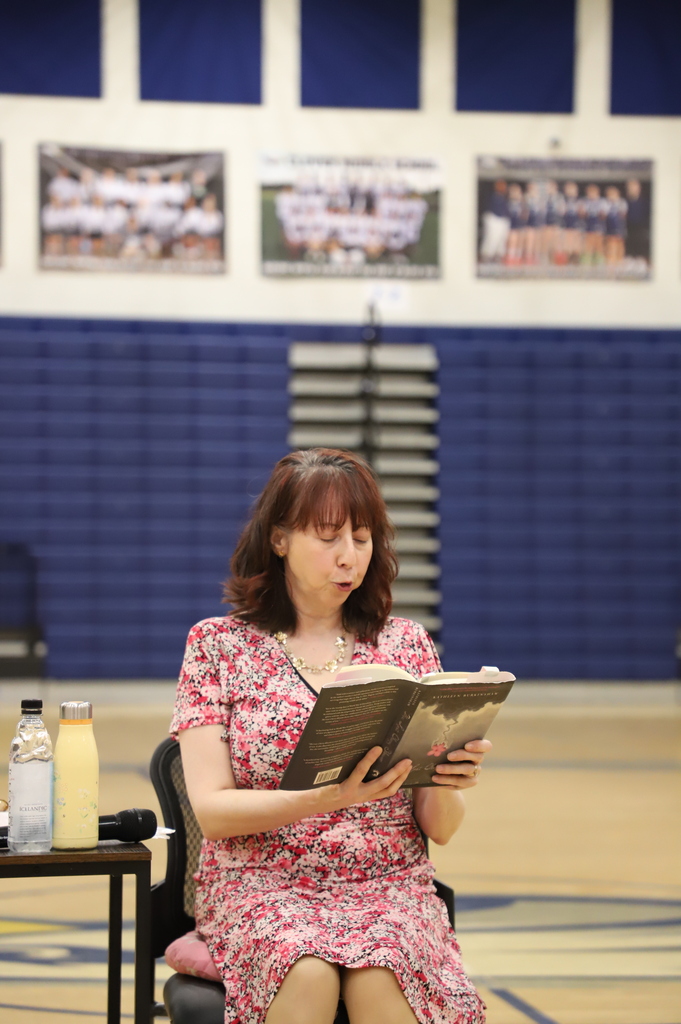
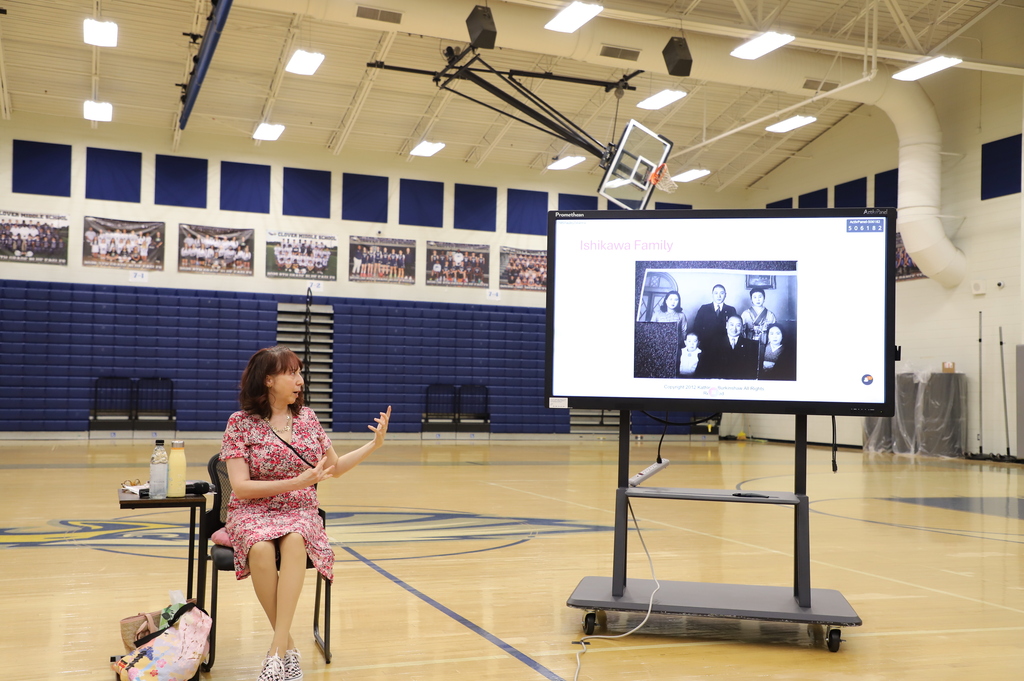
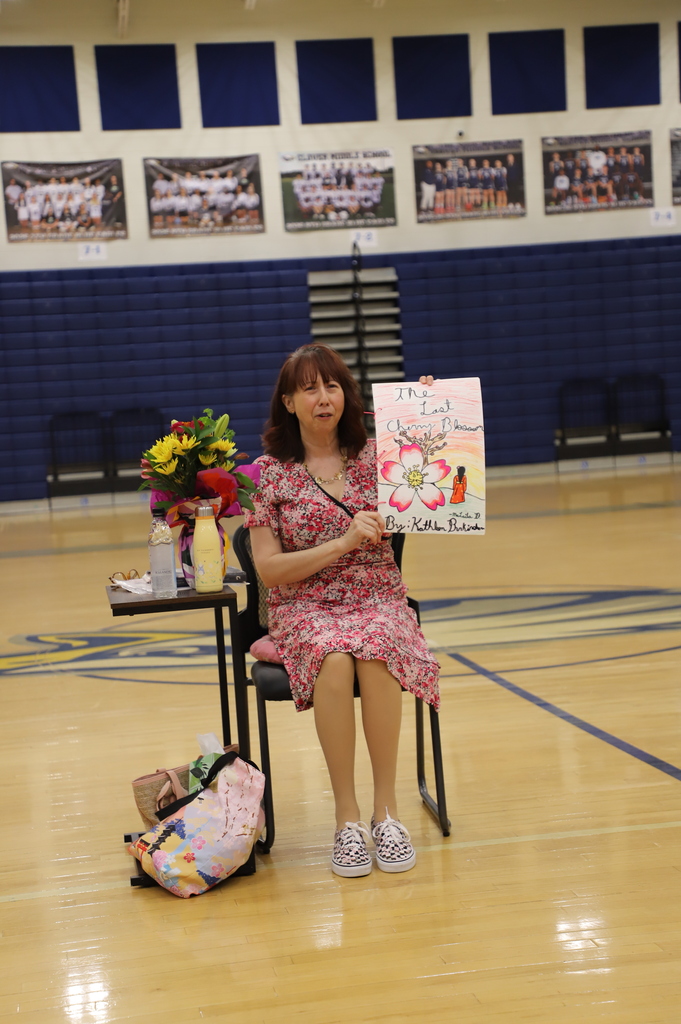
Author Kathleen Burkinshaw visited with sixth-grade students at Clover Middle School (CMS) today as the culminating activity of their novel study of "The Last Cherry Blossom."
Burkinshaw's "The Last Cherry Blossom" recounts her mother's story of survival following the August 6, 1945, bombing of Hiroshima. Her mother, Yuriko, was 12 years-old at the time--around the same age as these sixth-grade readers. Yuriko's family and home were both destroyed in the attack.
Burkinshaw's mother did not speak about this incident throughout her life, even after moving to Tokyo and later becoming an American citizen. Yuriko suffered from Post Traumatic Stress Disorder as a result of that fateful day and tried to avoid thinking about it.
That changed when Burkinshaw's daughter was in middle school and started studying World War II. The family was taken aback when students in her class began characterizing the mushroom cloud as "cool." This motivated Yuriko to visit the school to deliver her talk about her experience. This opened the door for more conversations, leading to the publication of "The Last Cherry Blossom." Burkinshaw calls her mother "the bravest person I will ever know."
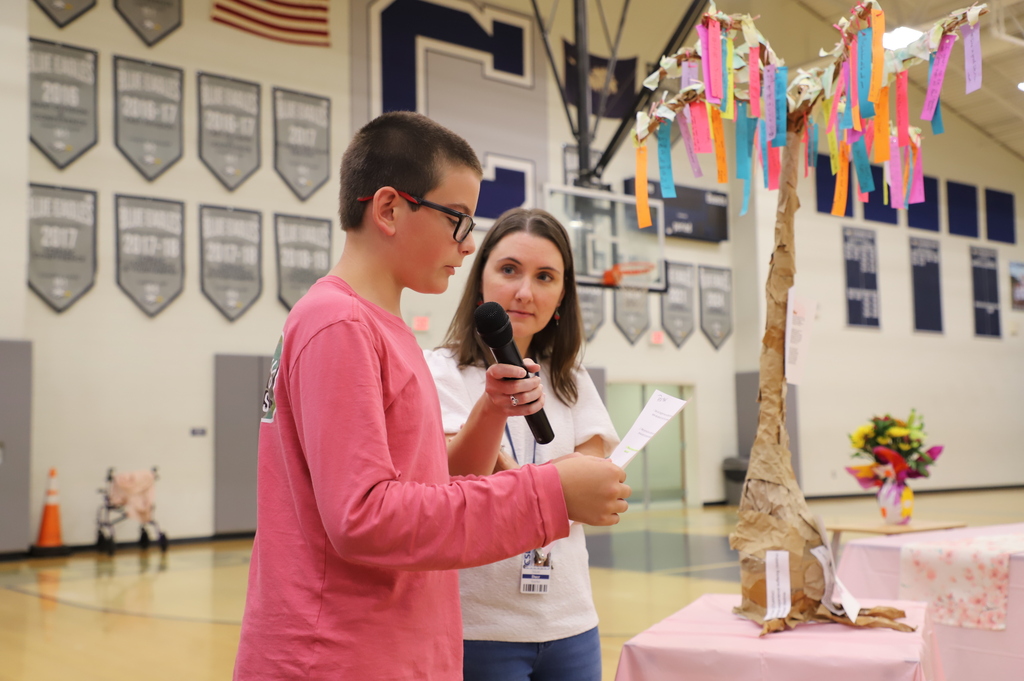
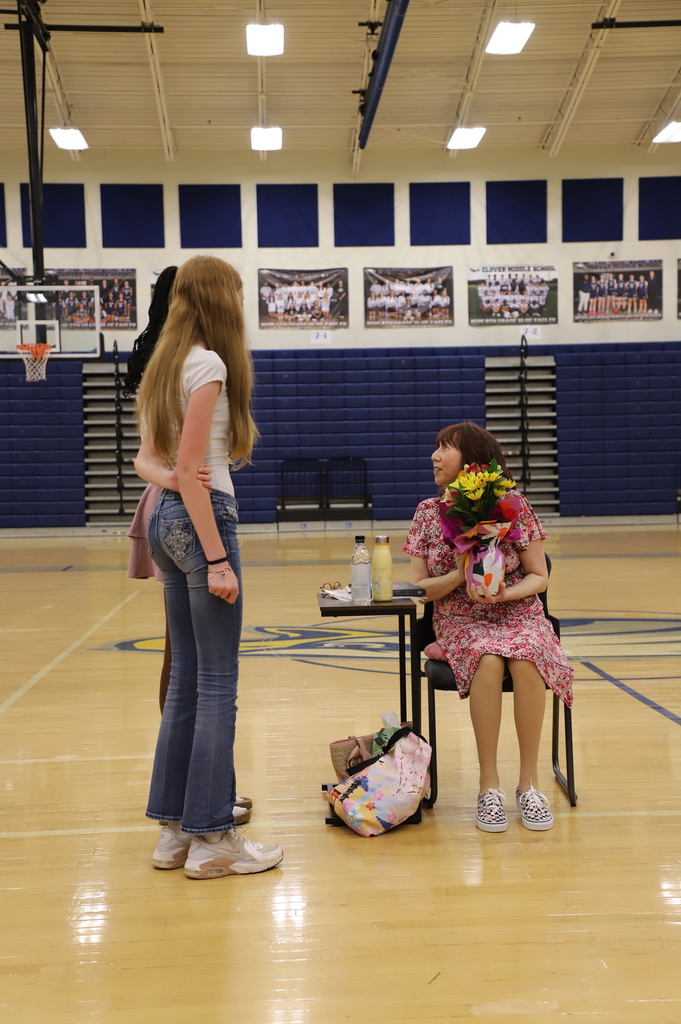
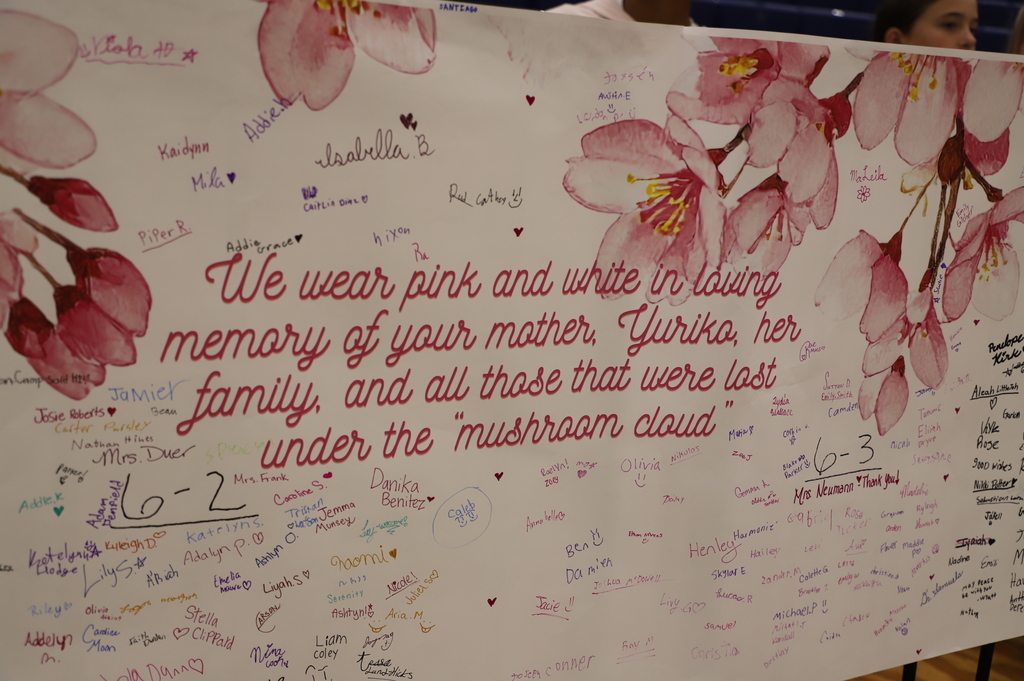
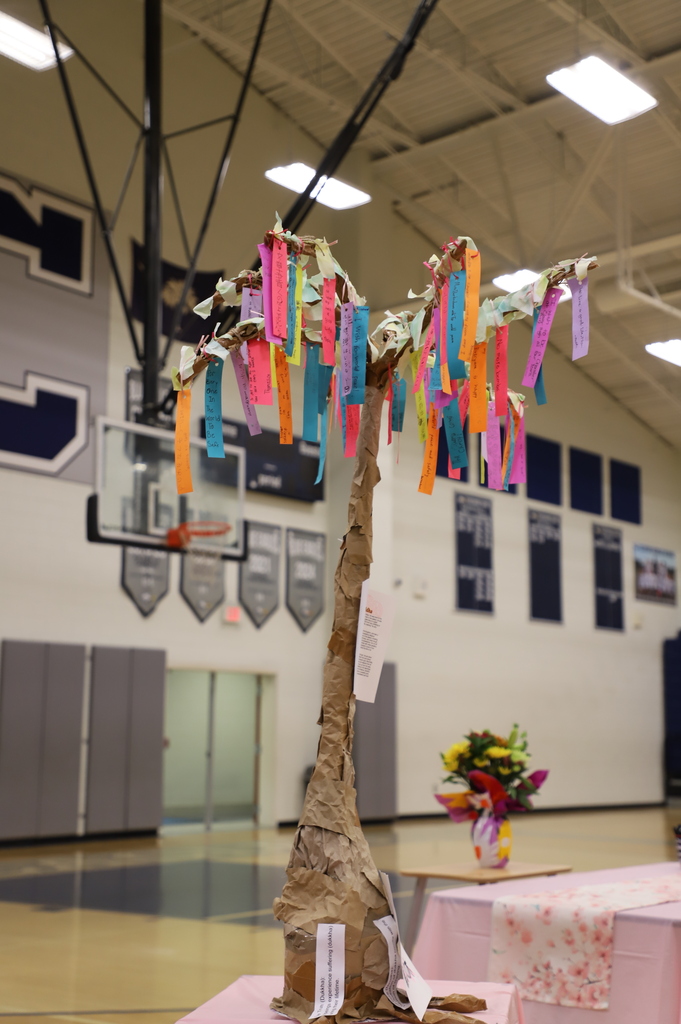
Students wore pink to the author talk in memory of Yuriko and the others lost in Hiroshima. Following the Burkinshaw's presentation, students asked thoughtful questions . The PTO provided flowers to be presented to Burkinshaw, and students shared their wishes for the world on a wish tree. Another class shared a reflection card in which they wrote about how the book impacted them. A small group of students performed "Sakura ," a cherry blossom song referenced in the book.
Ms. Burkinshaw's appearance was a rare treat. She suffers from Reflex Sympathetic Dystrophy, a neurological chronic pain disease that was caused by her mother's exposure to radiation during the attack on Hiroshima. This disorder limits the author's mobility, so she makes just one in-person school visit per year and engages with other classes of students across the country virtually.
CMS thanks Ms. Burkinshaw for sharing her moving story with them.
Burkinshaw's "The Last Cherry Blossom" recounts her mother's story of survival following the August 6, 1945, bombing of Hiroshima. Her mother, Yuriko, was 12 years-old at the time--around the same age as these sixth-grade readers. Yuriko's family and home were both destroyed in the attack.
Burkinshaw's mother did not speak about this incident throughout her life, even after moving to Tokyo and later becoming an American citizen. Yuriko suffered from Post Traumatic Stress Disorder as a result of that fateful day and tried to avoid thinking about it.
That changed when Burkinshaw's daughter was in middle school and started studying World War II. The family was taken aback when students in her class began characterizing the mushroom cloud as "cool." This motivated Yuriko to visit the school to deliver her talk about her experience. This opened the door for more conversations, leading to the publication of "The Last Cherry Blossom." Burkinshaw calls her mother "the bravest person I will ever know."
Students wore pink to the author talk in memory of Yuriko and the others lost in Hiroshima. Following the Burkinshaw's presentation, students asked thoughtful questions . The PTO provided flowers to be presented to Burkinshaw, and students shared their wishes for the world on a wish tree. Another class shared a reflection card in which they wrote about how the book impacted them. A small group of students performed "Sakura ," a cherry blossom song referenced in the book.
Ms. Burkinshaw's appearance was a rare treat. She suffers from Reflex Sympathetic Dystrophy, a neurological chronic pain disease that was caused by her mother's exposure to radiation during the attack on Hiroshima. This disorder limits the author's mobility, so she makes just one in-person school visit per year and engages with other classes of students across the country virtually.
CMS thanks Ms. Burkinshaw for sharing her moving story with them.